Use the current booking channel linked from the official Ministry park page, which announced a new platform in May 2026. Check the entry price for your date and visitor category, required documents and closures; confirm whether entry is included in your chosen tour. Official park page.
What is the Ijen blue fire, and why is it never guaranteed?
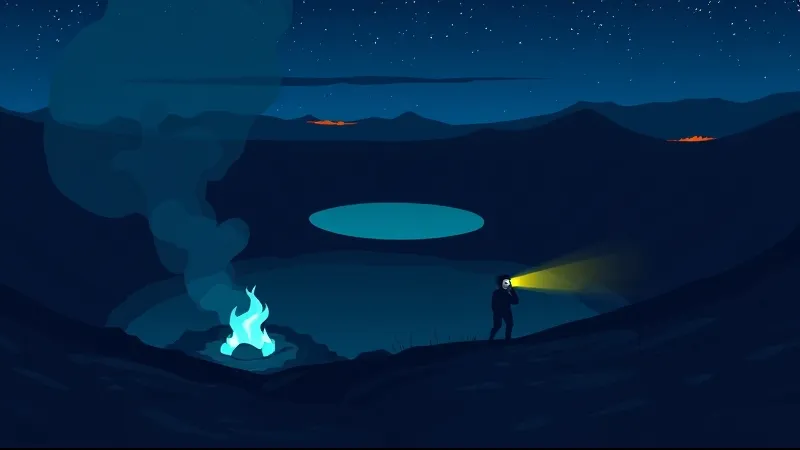
The Ijen blue fire is burning gas, not lava. Sulfur-rich volcanic gases escape under pressure from fumaroles on the crater floor of Kawah Ijen, ignite the instant they meet the oxygen in the air, and burn with an electric-blue flame that glows only in full darkness. It is a real chemical phenomenon — but it is a bonus, never a guarantee. The flames depend on gas flow, wind, weather and active sulfur mining — and the authorities suspend and reopen crater access depending on gas readings and works, with some suspensions lasting months, including in recent years.
The crater rim, sunrise and lake are planned highlights, but gas conditions, weather and official restrictions can prevent access or visibility. Those are visible in daylight and do not hinge on the pre-dawn dark window. So plan your trip around the rim and the lake, treat the blue fire as a possible extra, and always check current conditions on official sources — the Indonesian volcano monitoring service (PVMBG / MAGMA Indonesia) and the East Java park authority (BBKSDA Jawa Timur) — before you book. A photo posted online last week tells you nothing about tonight. If you are still deciding what kind of trek fits you, our sunrise hike vs midnight blue fire trek comparison lays out the trade-off honestly.
What causes the blue flames — is it lava or burning gas?
It is combustion, not glowing rock. Kawah Ijen sits on a vent that pushes out gases extremely rich in sulfur. As these gases emerge from cracks and pipes in the crater floor under pressure, they meet the air and ignite, burning with the characteristic blue flame that sulfur combustion produces. Some of the sulfur also condenses into molten liquid — bright red while it is hot — which flows downhill and can catch fire as it goes. In darkness, the burning gas and burning liquid sulfur read as rivers and sheets of blue light.
The key point for understanding the phenomenon: the colour comes from the burning gas, not from incandescent lava. Ijen is not erupting molten rock at the surface when the blue fire appears; you are watching a chemical fire fed by volcanic emissions. This is why the effect is invisible by day — daylight simply overwhelms the faint blue glow. The Smithsonian's Global Volcanism Program page on Ijen describes the crater's hydrothermal system and the labour-intensive sulfur mining that both stem from these same gas emissions.
How hot are the gases and flames at the Ijen crater?
The gases are hot enough to be dangerous on their own. Field documentation of the Ijen fumaroles reports emerging sulfuric gases reaching temperatures around 600°C, with flames recorded rising up to roughly 5 metres when the gas flow is strong. That combination — high heat plus a heavy load of toxic gases — is exactly why the crater floor is not a casual place to stand.
The gases are not just hot; they are poisonous. Ijen's plume carries sulfur dioxide (SO₂) and hydrogen sulfide (H₂S), which sting the eyes and throat and, in a strong gust, can become genuinely hazardous to breathe. This is why a proper gas mask is strongly advised near the crater floor — and why licensed tours provide one and make it mandatory in the descent zone. The heat, the flames and the toxic plume are three separate reasons the phenomenon must be treated as a serious volcanic environment, not a photo backdrop. The ongoing monitoring behind these figures is documented by the Smithsonian Global Volcanism Program and Indonesia's volcanological service.
When is the blue fire actually visible?
The flames burn more or less continuously, but your eyes can only pick out the blue in complete darkness — roughly between 02:00 and 04:00–04:30, before the first daylight washes the glow out. As soon as the sky begins to pale, the flames fade from view even though the gas is still burning.
That narrow window drives the whole schedule of a blue fire trek. Tours from Banyuwangi typically pick up around midnight–00:30 so hikers are at Paltuding when the gate opens at 02:00, climb to the crater rim and then descend to the crater floor while it is still fully dark, spend a short time at the flames, and climb back up to the rim in time for sunrise. The uphill trail from Paltuding to the crater rim is approximately 3 km each way; allow roughly 1.5–2 hours up, depending on pace and conditions. The descent to the crater floor is a separate, steeper, rockier scramble beyond the rim. In practice you are trading a night's sleep for a chance at the dark window, then staying up for sunrise. Weigh that honestly before you commit — it is a demanding night.
Why can't the blue fire be guaranteed on any given night?
Because it depends on physics and safety, not luck — and several variables have to line up at once. Any one of these can mean no visible flames on the night you happen to be there:
- Gas flow can weaken. The flames are only as strong as the sulfur emissions feeding them. When the gas output drops, so do the flames — sometimes for extended periods.
- Mining and safety closures. Kawah Ijen is a working sulfur mine. Active operations, maintenance, or a ranger decision to hold hikers back can close access to the crater floor where the flames are visible.
- Wind. If the wind blows the toxic plume across the descent path, rangers will stop people from going down. You can be on the rim and still be turned back for the crater floor.
- Weather and moonlight. Cloud, mist or rain hide the glow; a bright moon or lingering twilight reduces contrast. The rainy season (roughly November–April) also makes the trail slippery and the views cloudy.
- Elevated volcanic activity. Periodic increases in Ijen's activity can suspend the descent entirely. When the alert level rises, the crater floor is off limits — full stop.
None of this is bad luck; it is the normal behaviour of an active volcano with a toxic plume and a mine inside it. That is why every honest guide frames the blue fire as a possible bonus rather than a booked attraction. If you want the flames specifically, our comparison of an Ijen tour from Bali vs from Banyuwangi explains how the starting point affects your odds and your sleep.
What will you reliably see even without the blue fire?
Everything that makes Ijen worth the climb happens in daylight. Even on a night the flames never appear, you still get the three evergreen sights: the crater rim walk, sunrise over the caldera, and the turquoise Kawah Ijen lake below.
The turquoise crater lake is highly acidic. NASA’s account of 6 September 2014 described a pH below 0.3; this is a historical observation, not a current measurement. The crater rim, sunrise and lake are planned highlights, but gas conditions, weather and official restrictions can prevent access or visibility. See also: Ijen UNESCO Global Geopark, sunrise-focused tour from Banyuwangi.
How do you check conditions and activity level before you go?
Check the official monitoring service first, then confirm on the ground. Before you book — and again the day before you hike — look up Ijen's current alert level and any access notices on MAGMA Indonesia, the public portal of Indonesia's volcanology agency (PVMBG). An increase in the alert level can suspend the descent to the crater floor, which is exactly where the flames are visible, so this single check tells you whether the blue fire is even accessible.
Use the current booking channel linked from the official Ministry park page, which announced a new platform in May 2026. Check the entry price for your date and visitor category, required documents and closures; confirm whether entry is included in your chosen tour.
How should you prepare to give yourself the best chance?
Preparation does not summon the flames, but it removes every reason you might be turned back or forced to quit. The evergreen checklist for Ijen:
- Confirm the respirator model, suitable cartridges, condition and fit with a competent provider. Check what your booking actually includes. Equipment is a limited protective measure, not permission to enter or remain in a gas cloud.
- A headlamp, hands-free, plus spare batteries. You will hike for hours in the dark and need both hands on the descent.
- Warm layers. Bring warm layers and a windproof shell for the exposed rim, and check the BMKG forecast before departure. It is tropical Indonesia, but the pre-dawn summit air is cold and windy.
- Sturdy footwear with grip. The 3 km trail is steep, and the scramble down to the crater floor is rockier and looser still.
- A guide familiar with the route and current restrictions can help with logistics and decisions, but cannot guarantee safe gas exposure or override a closure.
The park requires a doctor-issued health certificate dated no more than three days before the visit. It advises against hiking with a history of heart disease, asthma, acute respiratory infection or other respiratory disorders. Seek individual medical advice, including during pregnancy; a certificate or mask does not guarantee safety. Also, the sulfur miners still working inside the crater carry loads of around 75–90 kg up that same path — treat them with respect, ask before taking photos, and never frame them as an attraction. And remember the hike itself is demanding whether or not the flames appear, so come rested and fit. To see how the flame-chasing option is actually packaged, look at a Bali-based 24-hour Ijen blue fire tour — just note that from Bali it is a long overnight trip (a 4–5 h drive to Gilimanuk, a ~45–60 min ferry to Ketapang, then ~1–1.5 h to the base), against ~1–1.5 h from Banyuwangi town.
Frequently asked questions about the Ijen blue fire
Is the blue fire always burning?
The gas burns more or less continuously when emissions are strong, but that is not the same as being visible or accessible. Gas flow can weaken for long stretches — and suspensions of crater access have lasted months at a time, even recently — while mining, wind or elevated activity can close the crater floor even when the gas is burning. Treat it as a bonus, never a fixed feature.
Can you see it during the day?
No. The flames are faint, so daylight completely washes out the blue glow. They are only visible to the naked eye in full darkness, roughly between 02:00 and 04:00–04:30, before the sky begins to lighten.
What are the odds of seeing it?
There is no honest fixed percentage, because it depends on gas flow, wind, weather, moonlight, mining and the volcano's alert level all at once. Anyone quoting you a guaranteed success rate is guessing. Check MAGMA Indonesia for the current alert level and ask a licensed guide the day before for the realistic picture.
Is it dangerous?
Volcanic gas can affect both the rim and crater interior. Stinging eyes or throat, coughing or breathing difficulty are exposure symptoms: stop, move away as directed by park staff and seek medical help if symptoms are severe or persist. A mask does not make a dangerous atmosphere safe. The park requires a doctor-issued health certificate dated no more than three days before the visit. It advises against hiking with a history of heart disease, asthma, acute respiratory infection or other respiratory disorders. Seek individual medical advice, including during pregnancy; a certificate or mask does not guarantee safety.
Where else in the world does it occur?
Visible burning-sulfur blue flames of this scale are extremely rare; Kawah Ijen is the best-known place on Earth to see the effect. Similar sulfur combustion can occur at a few other high-sulfur volcanic and fumarole sites, but nowhere else is it as accessible or as concentrated as at Ijen.
Sources
- Global Volcanism Program — Ijen (Smithsonian Institution) — volcano overview, crater lake and sulfur mining.
- MAGMA Indonesia (PVMBG) — official Indonesian volcano monitoring, alert levels and access notices.
- Kawah Ijen — official booking instructions
- Ijen UNESCO Global Geopark — geological significance of the Ijen caldera and crater lake.
- Indonesia Travel — official tourism portal — general destination information for East Java and Kawah Ijen.
Always confirm the volcano's current status and crater-floor access on PVMBG and the park authority before booking or hiking. This guide explains the phenomenon; only the official sources can tell you about tonight.