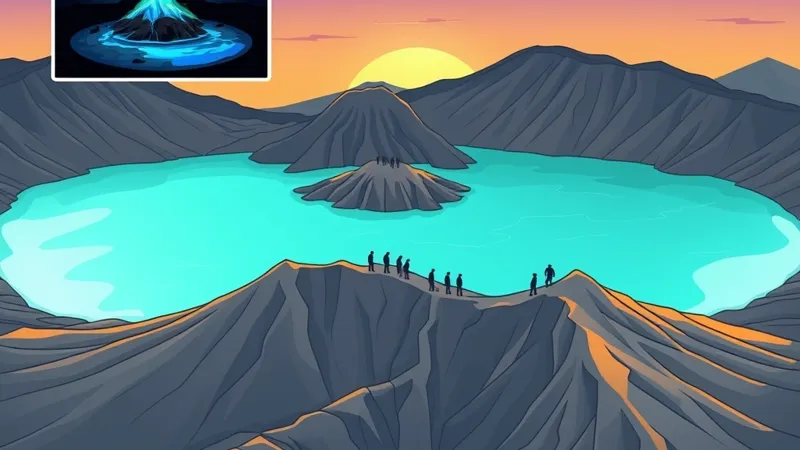
Is Kawah Ijen the most reliable place to see burning sulfur?
Kawah Ijen is a well-known destination for naturally burning sulfur, but calling it the world’s most reliable requires comparative evidence that is not established here. Recurring sulfur activity does not mean reliable visitor sightings.
Blue fire is never guaranteed. Gas flow, mining works, darkness, weather and access restrictions all influence whether visitors can see it. Flames may exist while the area from which they could be observed remains closed.
The crater rim, sunrise and turquoise acid lake are the dependable focus of an Ijen itinerary—not a promise of clear views or uninterrupted access. Weather and closures can affect any visit. Choose the landscape first and treat blue fire as a bonus when active, visible and legally accessible.
What causes Ijen’s blue fire, and is it blue lava?
Ijen’s blue fire is sulfur combustion, not blue molten rock. Sulfur-bearing volcanic gases burn when they encounter oxygen under suitable ignition conditions. Burning liquid sulfur can flow across the ground, producing the misleading appearance of blue lava.
The Royal Society of Chemistry’s sulfur entry provides the elemental chemistry; it should not be used to infer a measured temperature at Ijen.
Compact fact box
- Summit elevation: approximately 2,386 m; a mountain’s quoted elevation is not a surveyed height for every visitor viewpoint.
- Visitor route: the Paltuding-to-rim trail is approximately 3 km one way; confirm its permitted endpoint locally.
- Melting versus combustion: sulfur’s melting point describes its change from solid to liquid, not the temperature of volcanic gas or flames.
- Visibility: plan on darkness being necessary to distinguish the blue flames, not on daylight sightseeing.
Where else has natural blue fire been documented?
Blue-looking natural flames do not all share Ijen’s sulfur-combustion mechanism. A useful comparison distinguishes fuel, evidence and access rather than assembling a list of supposedly interchangeable attractions.
- Kawah Ijen, Indonesia: burning sulfur associated with volcanic gas emissions. Recurring sulfur activity is distinct from the occurrence of visible flames and from permission to approach them. The Smithsonian Global Volcanism Program provides the geological and eruption-report context, not a visitor sighting guarantee.
- Dallol, Ethiopia: historical sulfur-fire reports should not be treated as evidence of an active blue-fire attraction today. Hydrothermal activity alone does not establish ongoing combustion, recurrence or legal tourist access.
- Yanartaş, Turkey: a natural-gas flame comparison rather than a like-for-like sulfur destination. Gas-fed flames cannot establish how reliably visitors might see burning sulfur at Ijen.
- Electrical phenomena: blue light from electrical discharge is not combustion and belongs outside a burning-sulfur comparison.
There is no defensible global reliability ranking in these categories. Nor does this comparison establish that Ijen is the only place where sulfur can burn naturally.
What makes Ijen practical without making its flames predictable?
Ijen combines an established approach from East Java towns with a crater landscape worth visiting independently of blue fire. That is a stronger planning argument than an unsupported sighting probability.
Gas flow affects the fuel available for combustion. Mining works can alter conditions around sulfur outlets and affect access. Darkness affects whether flames stand out; it does not create them.
Weather affects views, footing and the movement of gas plumes. Volcanic alerts and park rules determine where visitors may go. Check MAGMA Indonesia for official volcanic information rather than treating a tour description as an access announcement.
When can visitors see blue fire, and is descent allowed?
Blue fire requires darkness for practical viewing, but nighttime entry and crater descent must never be assumed. A sunrise departure does not automatically include a legal opportunity to observe flames.
Authorities can suspend or reopen crater-floor access because of gas conditions, volcanic activity and mining works. Restrictions can persist for months. A pre-dawn pickup is useful only if it fits official opening hours and permitted routes.
Consult BBKSDA East Java and MAGMA before booking and again before travel. Follow exclusion zones; do not use unofficial paths or accept an offer to bypass a closure. Our sunrise hike versus midnight trek comparison explains the itinerary distinction.
How do you reach Ijen, and how demanding is the hike?
Paltuding is the usual trail starting point, and the rim hike is steep but non-technical. Transfer estimates depend on the actual pickup address, road conditions and stops.
- From Banyuwangi town: allow approximately 1–1.5 hours by road to Paltuding. Outlying hotels can change that estimate.
- From Bondowoso: confirm the route and transfer duration with the provider; do not substitute the Banyuwangi estimate.
- Road distance: request the distance for your specific pickup and route rather than relying on a town-to-volcano figure.
The commonly reported rim walk is approximately 3 km one way, taking about 1.5–2 hours uphill. Confirm the open route locally. Allow additional time for the descent on foot, rest stops and photographs; the downhill walk can be demanding on knees.
This estimate describes the rim hike, not a crater-floor descent. Steep sections, cold, darkness and lost sleep can make an otherwise non-technical walk tiring. See our getting-there guide for transport planning.
What can you see if blue fire is absent?
A rim-focused visit offers sunrise, the turquoise acid lake and volcanic terrain, subject to weather and permitted viewpoints. Cloud and gas can obscure the lake, and sunrise crowds may limit quiet viewing space.
The lake is highly acidic and unsuitable for swimming or contact. Its colour is associated with its unusual dissolved chemistry; it is not an invitation to approach the water.
Sulfur miners are working, not performing for visitors. Ask before photographing people, keep carrying routes clear and avoid treating difficult working conditions as entertainment.
What precautions matter around sulfur gases?
Sulfur dioxide exposure is a serious hazard, and protective equipment does not make dangerous conditions safe. The CDC/NIOSH Pocket Guide describes sulfur dioxide’s respiratory and eye hazards.
Gas plumes can shift quickly. Follow official directions and leave an affected area rather than remaining for photographs. An ordinary face covering is not gas protection; a supplied respirator is not permission to enter a restricted area.
Wear grippy footwear and warm layers. Carry a headlamp if nighttime access is permitted. Expect cold, sulfur smell or irritation, and uneven footing. Travelers with respiratory or cardiovascular conditions should seek individualized medical advice and check entry requirements before committing to the hike.
How should you compare tours without paying for a promise?
Compare the legal itinerary and inclusions, not the strength of a blue-fire guarantee. Ask about:
- Exact pickup location and expected transfer duration.
- Departure timing compatible with official access hours.
- Guide provision and entrance-ticket inclusion.
- Respiratory equipment, its suitability and other supplied gear.
- Cancellation terms for closures or changed access.
- The alternative itinerary when flames cannot be seen.
Visit Ijen is an independent editorial and affiliate comparison guide, not a tour operator. We may earn a commission through affiliate links. Live prices and ratings belong in GetYourGuide widgets on the tour pages, not evergreen promises in this article.
Compare Ijen tours around the rim experience you want, with blue fire treated as conditional.
FAQ
Is Ijen’s blue fire guaranteed, and can you see it in daylight?
No. Gas flow, mining works, weather and restrictions affect sightings. Darkness is necessary for practical blue-flame viewing, but does not guarantee visible fire or legal access.
Is blue fire lava, and does it occur elsewhere?
Ijen’s blue fire is burning sulfur, not molten rock. Natural blue-looking flames elsewhere may involve different fuels; Ijen should not be described as the only possible sulfur-burning location.
Is crater descent allowed, and where should I check?
Crater descent depends on official restrictions. Check BBKSDA East Java and MAGMA Indonesia before booking and before visiting; a sunrise tour does not establish permission to descend.
How long are the hike and transfer from Banyuwangi?
The Paltuding-to-rim hike is approximately 3 km one way, typically taking 1.5–2 hours uphill, plus return walking time. From Banyuwangi town, the drive is approximately 1–1.5 hours, depending on pickup and road conditions.
Is Ijen worthwhile without blue fire?
Yes, if you want the crater landscape, sunrise and turquoise lake rather than a guaranteed flame display. Views remain weather-dependent, and all visits depend on permitted access.
Sources
- Smithsonian Global Volcanism Program — volcano profiles and activity reports; not a global flame-sighting ranking.
- Royal Society of Chemistry: sulfur — elemental properties, distinct from site-specific flame temperatures.
- MAGMA Indonesia — official volcanic information and alerts.
- BBKSDA East Java — conservation-area notices and visitor-access requirements.
- CDC/NIOSH Pocket Guide — chemical exposure hazards, including sulfur dioxide.