What is the Bromo and Ijen 3-day combo, in short?
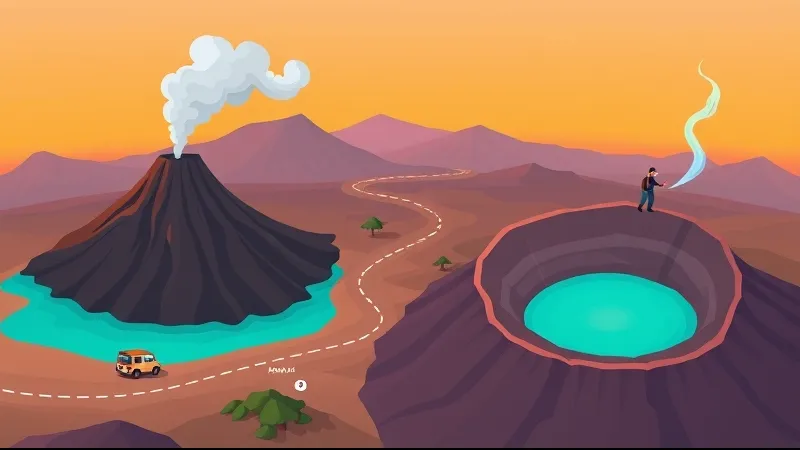
The Bromo and Ijen 3-day combo pairs East Java's two most-visited volcanoes into one loop, so you see both without doubling back. The standard route puts a Mount Bromo sunrise on the morning of Day 2 and a pre-dawn Kawah Ijen hike on Day 3, linked by a single long drive across East Java. Most trips start in Surabaya or Malang and finish near Banyuwangi, at Java's eastern tip.
The reliable core of the trip is fixed: the Bromo caldera at sunrise, then the Ijen crater rim with its turquoise acid lake and its own sunrise. The famous blue fire is a possible bonus, never a guarantee — it depends on sulfur gas flow, volcanic conditions, and active mining works, so on any given night it can be strong, faint, or absent.
Who does it suit? Travellers with three free days who want both volcanoes in one efficient run, and especially anyone routing from Java to Bali, since Ijen ends close to the Bali ferry. It rewards people who are reasonably fit and can handle two very early starts. If you want a slow, sleep-in holiday, this is not it.
How does the 3-day itinerary actually flow, day by day?
The combo is built around one transfer day sandwiched between two volcano mornings. Here is the standard structure.
Day 1 — Arrival and transfer to Bromo. You are picked up at Surabaya (Juanda) airport or Malang, then driven to a homestay near Bromo, usually in Cemoro Lawang on the caldera rim or in Probolinggo lower down. The rest of the day is rest — you will need it.
Day 2 — Bromo sunrise, then the long drive east. A very early start, hours before first light, gets you to a sunrise viewpoint on the caldera rim. After sunrise you cross the Sea of Sand by 4WD and climb on foot to the smoking crater rim. Then comes the trip's longest stretch: the transfer east toward Banyuwangi, with an overnight near Ijen.
Day 3 — Kawah Ijen before dawn. You set off in the middle of the night to reach the Paltuding base camp (1,841 m), then hike roughly 1.5–2 hours up to the crater rim (~2,386 m) for the acid lake and sunrise. Afterwards you are dropped off — often in Banyuwangi, or onward toward the Bali ferry.
Two things to plan for: two consecutive short nights, and a middle day that is mostly spent in a vehicle.
How far is it from Bromo to Ijen, and how long is the drive?
The two volcanoes sit at opposite ends of a long stretch of East Java, so the combo is deliberately built around one long transfer day by road from the Bromo area (Cemoro Lawang) to the Ijen base near Banyuwangi. Exact time depends on traffic and road conditions, and it eats most of a day.
That single drive is why an overnight stop between the two volcanoes matters. Doing Bromo at sunrise, driving across the province, and then hiking Ijen before dawn — all without a proper rest — is punishing. A homestay near Ijen breaks the transfer and gives you a few hours of sleep before the night hike.
Most itineraries do Bromo first and Ijen last. Ijen is at Java's eastern tip, closest to the Ketapang–Gilimanuk ferry to Bali, so ending there sets you up for the onward hop rather than backtracking.
What do you actually see at each volcano?
Two very different volcanoes, seen at two different sunrises.
Mount Bromo is an active cone sitting inside the wider Tengger caldera. You watch sunrise from a viewpoint on the caldera rim as the cones emerge from the mist, then a 4WD crosses the flat Sea of Sand to the base of Bromo, where a short climb up a stairway brings you to the smoking crater rim. It is a landscape volcano — a broad, ashen basin with a steaming cone in the middle.
Kawah Ijen is the chemistry volcano. From the Paltuding base camp (1,841 m) the trail runs about 3 km and gains roughly 545 m to the crater rim (~2,386 m). Inside sits the largest highly acidic crater lake in the world — about 1 km wide, ~200 m deep, with a pH between 0.13 and 0.5. Its turquoise colour comes from dissolved sulfuric and hydrochloric acids and metals. An active sulfur mine still works on the crater floor. The blue fire — burning sulfuric gases — is a night-only phenomenon that may or may not be visible on your particular night.
For a side-by-side of what each hike involves, see Bromo–Ijen combo vs Ijen only.
Is the blue fire guaranteed on the Ijen part of the trip?
No — the blue fire is never guaranteed. The electric-blue flames are sulfuric gases igniting on contact with air (they can rise up to about 5 m), and they are only visible in darkness, roughly during the 02:00–04:30 window before the sky lightens.
Whether they appear, and how strongly, depends on gas flow, volcanic activity, and ongoing mining works. Park authorities suspend and reopen crater-floor access based on gas readings, and those suspensions can last months — it has happened recently. Weather, cloud, and gas-safety closures can also limit access on any given night.
So set your expectations accordingly: treat the crater rim, the turquoise lake at sunrise, and the caldera landscape as the reliable rewards, and the blue fire as a bonus when conditions allow. Before you book, check current conditions on official sources such as MAGMA Indonesia / PVMBG and the BBKSDA East Java park authority. The comparison sunrise hike vs midnight blue fire trek explains the trade-off in more detail.
Who should book the combo — and who should skip it?
The combo fits a specific kind of traveller. Match yourself honestly before you commit.
Good fit:
- Reasonably fit people who are comfortable with two very early starts on back-to-back nights.
- Anyone happy with night hiking and a non-technical but steep climb to around 2,386 m.
- Travellers who can tolerate long car days — the middle day is mostly driving.
- Anyone routing Java to Bali who wants both volcanoes ticked off in one continuous run.
Poor fit:
- People with limited time or reduced mobility — the walking and the hours are real.
- Anyone who dislikes broken sleep; you lose two nights.
- Travellers who want a relaxed, slow pace. For them, a single-volcano 2-day option is far gentler.
- Anyone with asthma or heart conditions, who are officially not allowed near the crater because of sulfur-gas risk; pregnancy is also widely advised against.
There is no drama to the physical demands — it is early, cold, and a bit tiring, and thousands of ordinary travellers do it. But it is not a beach holiday.
How should you prepare for the two hikes?
Pack for cold, dark, and sulfur. Both mornings start in the dark, and altitude makes them genuinely chilly even in tropical Indonesia.
- Warm layers. Night temperatures at the Ijen rim are often 2–10°C. A fleece or light down layer, plus a windproof shell, makes the pre-dawn wait bearable.
- Sturdy hiking shoes. The Ijen trail is about 3 km and 1.5–2 hours uphill on loose, gravelly ground — steep but non-technical. Grippy soles matter more than fashion.
- A headlamp for the dark Ijen ascent, so your hands stay free.
- A gas mask or respirator for the sulfur fumes near the Ijen crater. Reputable tours provide gas masks, and they are mandatory near the crater floor — do not skip this.
- A health certificate. Ijen entry requires one, and rangers can deny access without it.
Stay on the marked paths and follow ranger guidance on gas conditions — sulfur clouds shift with the wind. And remember the sulfur miners still working inside the crater, carrying loads of about 75–90 kg: give way, ask before photographing, and never treat them as an attraction.
When is the best time of year to do the Bromo–Ijen combo?
Aim for the dry season for the best odds of clear skies. East Java's dry season runs roughly May–October, with the driest, most reliable months usually July–September (some years turn dry as early as April). Clearer skies generally mean better sunrises at both volcanoes and a better chance of seeing the blue fire in darkness.
The rainy season runs roughly November–April, peaking around February, when the trail turns slippery, views are often clouded, and there is a higher chance of gas-safety closures at Ijen.
Treat all of this as probabilities, not promises. Mountain weather changes fast year-round, and a clear forecast can cloud over by dawn. Check the official park and volcano-monitoring channels for current status before you travel — MAGMA Indonesia for volcanic activity and BBKSDA East Java for access and closures.
How does the combo connect to Bali or the rest of your trip?
The combo doubles as a natural Java-to-Bali bridge. Because the Ijen leg ends near Banyuwangi at Java's eastern tip, the Ketapang–Gilimanuk ferry to Bali is a short onward hop — the crossing itself is about 45–60 minutes, plus the short drive to the port. Many travellers finish Ijen in the morning and are on Bali soil the same day.
Going the other way, from Bali to Ijen is a long overnight trip: roughly 4–5 hours' drive to Gilimanuk, the ferry to Ketapang, then about 1–1.5 hours to the base. From Banyuwangi town itself, the base is only about 1–1.5 hours away.
If you are not continuing to Bali, the alternative is to loop back to Surabaya or Malang for onward flights. Typical drop-off points are Banyuwangi (for the ferry or the local airport) or back at your start city — confirm yours in advance so you can book connections. For the mechanics of getting between all these points, see getting there and transport.
How much does a 3-day Bromo–Ijen tour cost, and how is it booked?
Price depends on how you run the trip, not on a single sticker figure. The main drivers are:
- Private vs shared vehicle and guide.
- Group size — costs split further with more people.
- Accommodation level at the Bromo and Ijen homestays.
- Start and end city (Surabaya, Malang, Banyuwangi, or a Bali pickup).
Rather than quote numbers that go stale, we point you to the live GetYourGuide listings on this site, where current prices, inclusions, and traveller ratings are shown in real time. That is the only reliable place to compare what you are actually paying for.
When you compare, read the inclusions carefully. Most combo tours include transport, driver, homestay accommodation, and entrance support; they often exclude park fees, gas-mask rental if not bundled, and some meals — so compare like for like. Note that Ijen park entry is e-ticket only via tiket.bbksdajatim.org (no tickets at the gate), at IDR 100,000 on weekdays and IDR 150,000 on weekends and holidays for foreigners, with a health certificate required and the park closed on the first Friday of each month. To weigh a full combo against a lighter option, compare the 3-day Bromo–Ijen tour from Bali with a standalone Ijen sunrise tour from Banyuwangi.
Frequently asked questions
Can you do Bromo and Ijen in less than 3 days?
It is possible but rushed — the two volcanoes sit far apart and each needs a pre-dawn start, so squeezing them into two days means almost no rest and a brutal amount of driving. Three days is the standard for good reason. If time is tight, most travellers do one volcano well rather than both badly.
Which airport should you fly into?
For a Bromo-first combo, fly into Surabaya (Juanda) or Malang, the usual pickup points. If you plan to reverse the route or start from the Ijen side, Banyuwangi has its own smaller airport. Your choice usually follows whichever end of the trip you are starting from.
Is the blue fire guaranteed?
No. The blue fire is burning sulfuric gas, visible only in darkness, and it depends on gas flow, volcanic conditions, and mining activity — so it can be strong, faint, or absent, and access is sometimes suspended for months. Treat the crater rim, lake, and sunrise as the sure thing, and check MAGMA Indonesia before booking.
How fit do you need to be?
Moderately fit. The Ijen climb is about 3 km and 1.5–2 hours uphill on loose ground — steep but non-technical — after little sleep and at altitude near the 2,386 m rim. Bromo is much easier. People with asthma or heart conditions are officially not allowed near the crater, and pregnancy is strongly advised against.
Do you need a gas mask, and is a guide required for Ijen?
Yes to the mask near the crater — a proper gas mask is mandatory near the crater floor, and reputable tours provide one. A licensed guide is standard practice on Ijen and strongly recommended for the night hike and gas safety; combined with the required health certificate and e-ticket, going with an organised tour is the simplest way to meet the rules.
Sources
- Ijen UNESCO Global Geopark — UNESCO — geopark designation and crater-lake data.
- UNESCO Global Geoparks Council, 7th session report — endorsement of Ijen among the 2023 Global Geoparks.
- Bromo Tengger Semeru National Park (official) — Bromo access and park management.
- MAGMA Indonesia / PVMBG — official volcanic activity and safety status.
- BBKSDA East Java park authority — Ijen access, closures, and e-ticketing via tiket.bbksdajatim.org.
- Smithsonian Global Volcanism Program — Ijen — volcano profile and eruptive history.
- Indonesia Travel (official tourism board) — regional travel context for East Java.