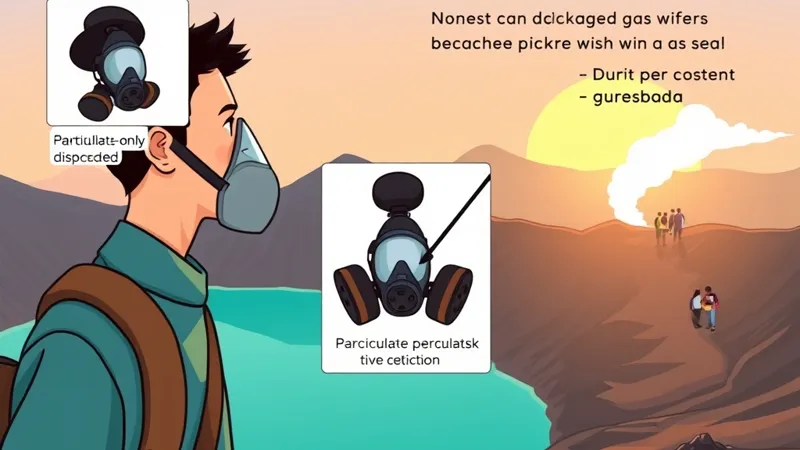
Do you need a gas mask to visit Kawah Ijen?
Plan for possible sulfur dioxide exposure, but never treat a gas mask as permission to enter gas. Cloth coverings, surgical masks and particulate-only respirators do not protect against sulfur dioxide. A correctly selected, fitted respirator has limits: it does not make the crater safe. Follow current access restrictions and leave gas-affected areas.
The crater rim, sunrise and turquoise lake are the core itinerary, subject to conditions. Blue fire is never guaranteed: it is a bonus dependent on gas flow, volcanic activity, mining works and permitted access. Check MAGMA Indonesia and BBKSDA East Java before booking and again before departure.
Respirator selection depends on the contaminant, concentration and equipment limitations—not simply whether a tour advertises a mask. The NIOSH Pocket Guide explains sulfur dioxide hazards and respiratory-protection limits.
When can volcanic gas affect the trail and crater rim?
Gas can affect both the trail and rim; neither a location nor a particular hour is automatically gas-free. Wind changes plume direction, terrain influences gas movement and accumulation, and volcanic activity changes emissions. Smell cannot reliably establish safety.
A rim visit is different from descending into the crater. Crater-floor access must never be assumed: authorities can suspend it because of gas readings, volcanic activity or mining works, and closures can last months. Consult MAGMA advisories and conservation-area notices rather than interpreting a bookable listing as access authorization.
Our sunrise hike versus midnight blue-fire trek comparison explains the itinerary distinction.
Which respirator filters can protect against sulfur dioxide?
Only cartridges explicitly approved for sulfur dioxide under the applicable certification and manufacturer instructions are candidates for this gas. They still require suitable exposure conditions and an effective face seal.
- Cloth and surgical masks: no dependable protection against sulfur dioxide.
- Particulate-only respirators: filter particles, not sulfur dioxide gas.
- Reusable respirators with appropriate gas cartridges: potentially suitable within their approved limits; verify the exact facepiece-and-cartridge combination.
An “activated-carbon” label alone proves nothing about sulfur dioxide approval or protective capacity. Consult manufacturer respiratory-protection resources and the instructions for the actual equipment, alongside NIOSH guidance.
Air-purifying respirators do not supply oxygen. They do not permit entry into unknown, oxygen-deficient or immediately dangerous atmospheres. A tourist rental respirator is not emergency-entry equipment.
What gas masks do Kawah Ijen tours provide?
Equipment varies, so “gas mask included” is a listing claim to confirm—not a verified specification. Distinguish equipment supplied within the booking, separately rented equipment and bring-your-own arrangements.
Use this comparison record for each shortlisted tour; leave missing information as a question:
- Inclusion: supplied, rented separately or bring your own?
- Respirator: which manufacturer and model?
- Cartridges: exact identification and sulfur dioxide approval?
- Sizes: which sizes are available, and can you try them beforehand?
- Cleaning: how are shared facepieces cleaned and disinfected?
- Replacement: what cartridge service-life policy applies, and are suitable spares available?
Visit Ijen is an independent editorial and affiliate guide, not a tour operator. Confirm listing claims directly with the provider. Current prices and ratings appear only in live GetYourGuide widgets on tour pages.
Compare Ijen tours using equipment answers and turnaround policies, not mask inclusion alone.
What should you ask a tour provider before booking?
Ask how protection and withdrawal decisions work in practice. Copy these questions into your booking inquiry:
- Are the cartridges explicitly suitable for sulfur dioxide and compatible with the facepiece?
- How do you manage cartridge service life, storage and replacement?
- Are masks inspected, cleaned and disinfected between users?
- What happens if I cannot obtain a suitable fit?
- How do you check official access restrictions before departure?
- How will the guide communicate a gas warning or turnaround instruction?
- Who accompanies someone who needs to leave, and what assistance is available?
- What rim itinerary replaces blue-fire viewing when access is unavailable?
Equipment inclusion alone does not demonstrate safe operating practices.
How should you check a borrowed or rented respirator?
Inspect it in clean air, with enough time to reject unsuitable equipment. Follow the model’s manufacturer instructions:
- Check the facepiece and sealing surface for cracks, deformation or dirt.
- Examine straps, buckles, inhalation and exhalation valves, and cartridge seals.
- Confirm compatible cartridges, readable identification and relevant approval markings.
- Check expiry information and intact packaging where applicable.
- Ask for cartridge opening, use, storage and replacement records.
Appearance alone cannot establish remaining cartridge effectiveness. An unexpired cartridge may still be unsuitable after use or poor storage.
Shared facepieces require manufacturer-approved cleaning and disinfection. Do not wash cartridges. Unverifiable equipment is a reason to decline gas-exposed activity, not improvise with a scarf or stacked masks.
How do you fit and use a respirator properly?
Fit it in clean air before potential exposure, following its specific instructions. Select the correct size, position the facepiece, adjust straps evenly and perform the manufacturer’s user seal check every time you put it on. Keep hair and clothing away from the sealing surface.
A user seal check is not formal fit testing. Fit testing assesses whether a particular model and size fits the wearer; a seal check looks for leakage when donning it. Facial hair crossing the seal can prevent effective protection, and adult rental masks may not fit children.
OSHA’s respiratory protection standard provides technical guidance on fit, facial hair and respirator programs. It is not Indonesian tourist law.
What should you do if you feel irritation or breathing difficulty?
Withdraw promptly rather than testing whether your mask will cope.
Action box: Stop approaching the gas. Alert the guide. Leave the affected area promptly by a safe route. Seek urgent medical assistance for breathing difficulty, chest tightness, severe symptoms or symptoms that persist. Do not remain to photograph blue fire or adjust equipment in the plume.
Half-face respirators do not protect the eyes. Irritation or odor inside the mask warrants withdrawal, not an on-site cartridge experiment. Absence of odor does not establish safety.
People with asthma or heart or lung conditions should seek individualized medical advice before booking and confirm applicable health-entry requirements. A respirator is not a medical clearance.
How should mask preparation fit into your Ijen hiking plan?
Complete the equipment briefing and fit check before leaving the trailhead. Carry a headlamp, warm layers and water, and agree on a turnaround plan independent of blue-fire access. Cold, lost sleep, sulfur irritation and sunrise crowds are practical downsides.
Route and elevation: Plan around the approximately 3 km one-way Paltuding-to-rim hike, a steep but non-technical ascent. Volcano elevation and the elevation of your actual viewpoint are not interchangeable; consult the Smithsonian Global Volcanism Program for the Ijen profile and confirm the permitted route with the provider. Do not use a volcano’s headline elevation as a precise viewpoint measurement.
Drive duration depends on pickup location, traffic and ferry arrangements; temperature depends on weather and exposure. Check route-specific logistics and the departure forecast rather than treating estimates as universal. Our getting-there guide helps organize transport questions.
What else should visitors know about gas masks at Kawah Ijen?
Fit, filter suitability and access restrictions matter more than owning a mask.
Is a particulate-only respirator enough, or would a wet scarf work?
Neither protects against sulfur dioxide. Particulate-only respirators filter particles; a wet scarf is not an approved gas respirator.
Do all tours include a respirator?
Do not assume so. Confirm inclusion, model, cartridges, sizes and any separate rental arrangement directly with the provider.
Does a beard affect fit, and can children use rental masks?
Facial hair across the seal can cause leakage. Adult masks may not fit children; do not assume that tightening straps solves the problem.
Does buying a mask permit crater descent?
No. Equipment does not override official restrictions or make unknown gas concentrations acceptable.
Is blue fire guaranteed if access opens?
No. Blue fire is never guaranteed and cannot justify entering restricted or gas-affected areas. Keep the rim, sunrise and lake as the core plan, subject to conditions.
Sources
Authority notices, technical guidance and provider claims serve different purposes. These references are not confirmation of today’s access status or any tour’s equipment.
- MAGMA Indonesia: official volcanic advisories.
- BBKSDA East Java: conservation-area access notices.
- Smithsonian Global Volcanism Program: scientific volcano profiles and elevation context.
- NIOSH Pocket Guide: chemical hazards and respirator limitations.
- OSHA respiratory protection standard: technical fit and use guidance.
- 3M respiratory protection resources: selection resources; obtain instructions for the exact facepiece and cartridges supplied.