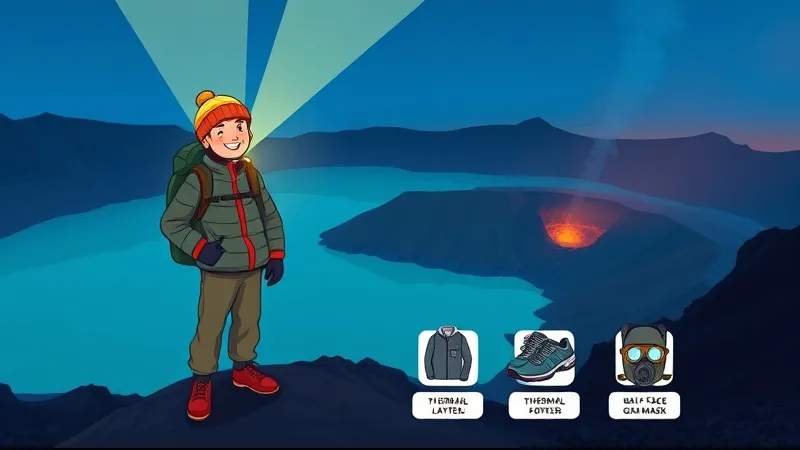
The Kawah Ijen night hike is a cold, dark, steep climb in a tropical country — a combination that catches many travellers off guard. Get the packing right and it becomes a manageable pre-dawn walk to a turquoise acid lake. Get it wrong and you shiver at the rim in shorts, waiting for a sunrise you can barely enjoy. This guide covers exactly what to bring, what a gas mask really does, and what to leave at your hotel.
What should you pack for the Kawah Ijen night hike?
Pack warm layers, a windproof and rain-resistant outer layer, a hat, gloves, closed shoes with grip, a headlamp with spare batteries, water and snacks. Check the weather, park equipment requirements and the protection your provider supplies before setting off. Do not assume that staying on the rim removes the gas hazard. Leave heavy luggage and unnecessary valuables at your accommodation.
One honest note before you plan around it: the famous blue fire is a possible bonus, never a guarantee. It depends on gas flow, weather, and mining activity, and the authorities suspend and reopen access to it based on gas readings and works — sometimes for months at a time, including recently. The rim hike, sunrise and lake are planned highlights, subject to gas conditions, weather, visibility and official access restrictions. Blue fire is not guaranteed. Always check current conditions on official sources before booking.
How cold is it at the Kawah Ijen crater rim at night?
Bring warm layers and a windproof shell for the exposed rim, and check the BMKG forecast before departure.
Adjust layers while walking and add insulation when you stop.
How should you layer your clothing for the cold at the rim?
Use the classic three-layer system, because it lets you adapt as your body heat and the temperature both change:
- Base layer: a moisture-wicking thermal top (merino or synthetic), not cotton. Cotton holds sweat against your skin and chills you.
- Mid layer: an insulating fleece or light down jacket to trap warmth.
- Outer layer: a windproof, water-resistant shell to block the gusts that drive the wind chill.
Add a warm hat, a buff or neck gaiter, and gloves — extremities lose heat fastest and are cheap to protect. Wear long trousers, not shorts; they guard against cold, wind, and trailside brush.
The key insight is movement. You hike up and sweat, then stand still and freeze at the rim while you wait for sunrise. A single thick coat traps sweat on the climb and can't be adjusted. Several thinner layers you can add and remove will keep you far more comfortable across the whole night. For a sense of how the timing shapes what you carry, compare the sunrise hike versus the midnight blue-fire trek.
What footwear and gear do you need for the 3 km trail?
The uphill trail from Paltuding to the crater rim is approximately 3 km each way; allow roughly 1.5–2 hours up, depending on pace and conditions. Parts of the climb are steep, with loose or slippery ground; footwear with reliable grip matters.
- Footwear: closed hiking shoes or trail runners with grip. Not sandals, not flip-flops. The path is loose and dusty in the dry season, slippery in the wet.
- Headlamp with spare batteries: hands-free light is far safer than a phone torch on a dark, uneven trail. Bring spares — batteries drain fast in the cold.
- Small daypack: enough for water, layers, and snacks, and nothing more.
- Water: 1.5-2 litres. There is no reliable resupply on the climb.
- Trekking poles (optional): helpful for the knees on the steep descent, especially if you're carrying an extra layer or two.
Keep the pack light. Every extra kilo is felt on the steep final stretch at altitude before dawn.
Do you really need a gas mask at Kawah Ijen?
Exposure depends on gas, wind and the permitted route, not simply on whether you descend. Sulfur dioxide and other volcanic gases can reach the rim. Follow closures and staff instructions; no equipment makes a dangerous atmosphere safe.
- Crater interior: enter only if officially permitted; a booking or guide does not provide an exemption.
- Crater rim: gas, weather and visibility still matter. Do not remain in a plume to watch sunrise or photograph the lake.
Volcanic gases can affect the rim as well as the crater interior. Ordinary cloth, surgical and particle-filtering masks do not protect against gases. NIOSH guidance for sulfur dioxide requires protection selected for the specific contaminant and exposure conditions; cartridge compatibility, service life and fit matter. A rented mask or a generic “multi-gas” label does not establish adequate protection. Unknown or dangerous concentrations are a reason to leave, never a reason to rely on a tourist respirator.
What are the health and medical rules for the Ijen hike?
The official park instructions, checked on 13 September 2026, require a doctor-issued health certificate dated no more than three days before the visit. They advise against the hike for people with a history of heart disease, asthma, acute respiratory infection or other respiratory disorders. Check any additional current admission conditions and seek individual medical advice; a certificate is not a safety guarantee.
If you have asthma, chronic respiratory issues, a heart condition, or you are pregnant, consult a doctor before travelling and avoid the crater descent entirely. This is not bureaucratic caution — the gas load near the vents is genuinely hazardous to vulnerable lungs and hearts.
Two practical additions:
- Eye protection: ordinary sunglasses do not seal against gases; do not rely on generic goggles as a guarantee. Leave the exposure if your eyes sting.
- Rim visit: avoiding the descent removes that additional route, but gas, falls, weather and closures can still affect your visit.
What can you safely leave at the hotel?
Most of what's in your suitcase should stay behind. Leave at the hotel:
- Your main suitcase or backpack
- Laptop, tablet, and valuables
- Jewellery and formal clothes
- Excess cash and anything you'd hate to lose in the dark
You do not need a full change of clothes on the trail, a heavy tripod (unless you photograph seriously), or a wash bag of toiletries. These just add weight to a steep climb.
Keep the trail pack light and purposeful: warm layers, water, headlamp, phone, and a small amount of cash for porter tips and snacks — the entrance ticket itself is e-ticket only, bought online in advance, so you don't pay cash at the gate. A lighter pack is the single easiest way to make the climb more pleasant.
Is the blue fire guaranteed, and how does that change what you pack?
No — and this changes everything about how you plan. The blue fire is sulfuric gas igniting on contact with air, sometimes rising in flames up to about 5 m, and it is visible only in darkness (roughly 02:00-04:30). But it depends on gas flow, weather, and mining works, and it is never guaranteed. It has gone dark, and access has been suspended, for extended periods — sometimes months at a time, including recently — for maintenance or low emissions. Never assume it will be lit, and never rely on anyone's promise that it will be. Check current conditions on official monitoring sources before you book.
The rim hike, sunrise and lake are planned highlights, subject to gas conditions, weather, visibility and official access restrictions. Blue fire is not guaranteed.
Plan your equipment for the conditions on the whole permitted route, including the rim. Neither the lake view nor sunrise is guaranteed, and a respirator does not make a closed route accessible. Compare the tour options and confirm equipment and access separately.
A simple checklist: your Kawah Ijen night hike packing list
On your body
- Thermal base layer (moisture-wicking, not cotton)
- Fleece or light down mid-layer
- Windproof / water-resistant outer shell
- Long trousers
- Warm hat
- Gloves
- Buff or neck gaiter
- Closed hiking shoes or trail runners with grip
In your daypack
- Headlamp + spare batteries
- 1.5-2 litres of water
- Snacks
- Small cash (porter tips + snacks — entry is e-ticket only, bought online)
- Phone / power bank
- Tight-fitting goggles
Check before the hike, including a rim-only visit
- Park equipment requirements and appropriate respiratory protection, with the provider; never rely on a mask to remain in dangerous gas.
Leave at the hotel
- Main suitcase
- Laptop and valuables
- Jewellery and formal clothes
- Excess cash
A note on the miners and the entry rules
Sulfur miners still work inside the crater, carrying loads of 75-90 kg up the same trail you walk for fun. Treat them with respect: no photos without permission, and never treat their labour as an attraction.
Use the current booking channel linked from the official Ministry park page, which announced a new platform in May 2026. Check the entry price for your date and visitor category, required documents and closures; confirm whether entry is included in your chosen tour. See also: getting there guide.
Frequently asked questions
How cold does Kawah Ijen get at night?
Bring warm layers and a windproof shell for the exposed rim, and check the BMKG forecast before departure. Wind at the exposed rim makes the cold feel harsher still, so dress for the real-feel with warm layers even though this is tropical Indonesia.
Do I need to bring my own gas mask or is it provided?
Check the equipment actually included with the provider, for the whole permitted route. Respirator selection depends on the specific gas, concentration, cartridge condition and fit; a generic “multi-gas” label is not proof of adequate protection. Do not rely on rental equipment to remain in dangerous gas.
Are jeans okay for the hike?
Jeans are heavy and stay damp after sweating. Long, lightweight, quick-drying trousers are a more practical choice for the uphill walk.
Do I need hiking boots or are trainers fine?
You need closed shoes with real grip — either hiking shoes or sturdy trail runners. Parts of the climb are steep, with loose or slippery ground; footwear with reliable grip matters. Sandals and smooth-soled sneakers are not safe on this incline.
Is the blue fire always visible?
No. The blue fire is never guaranteed — it depends on gas flow, weather, and mining works, and it has been off for extended periods. Plan your trip around the crater rim, sunrise, and turquoise lake, and check current conditions on official sources before booking.
Do I need a medical certificate?
The park requires a doctor-issued health certificate dated no more than three days before the visit. It advises against hiking with a history of heart disease, asthma, acute respiratory infection or other respiratory disorders. Seek individual medical advice, including during pregnancy; a certificate or mask does not guarantee safety.
Can I do the hike with asthma?
The park requires a doctor-issued health certificate dated no more than three days before the visit. It advises against hiking with a history of heart disease, asthma, acute respiratory infection or other respiratory disorders. Seek individual medical advice, including during pregnancy; a certificate or mask does not guarantee safety.
Planning your visit? Compare the practical options — timing, difficulty, and what's included — in our guide to the Ijen sunrise tour from Banyuwangi, and check live availability and prices in the booking widgets on that page.
Sources
- Smithsonian Institution — Global Volcanism Program: Ijen volcano profile
- USGS — Volcanic gases and sulfur dioxide health effects
- US CDC / NIOSH — Sulfur dioxide and respirator selection
- World Health Organization — Air quality guidelines (sulfur dioxide)
- PVMBG / MAGMA Indonesia — Official Ijen monitoring
- BBKSDA East Java — TWA Kawah Ijen park authority (access rules, medical-certificate requirement)
- Indonesia Travel — Official tourism information